As businesses embrace digital transformation, customers and employees expect more than static information boards or printed brochures. They want interactive, engaging, and intuitive experiences. This is where a Digital Touch Table stands out.
From retail stores and museums to corporate offices and educational institutions, digital touch tables are helping organizations present information in a more dynamic and collaborative way. Their ability to combine touchscreen technology with interactive software makes them an ideal solution for businesses looking to improve customer engagement and workplace collaboration.
In this guide, we’ll explain what a digital touch table is, its key benefits, practical applications, and how to choose the right solution for your organization.
What Is a Digital Touch Table?
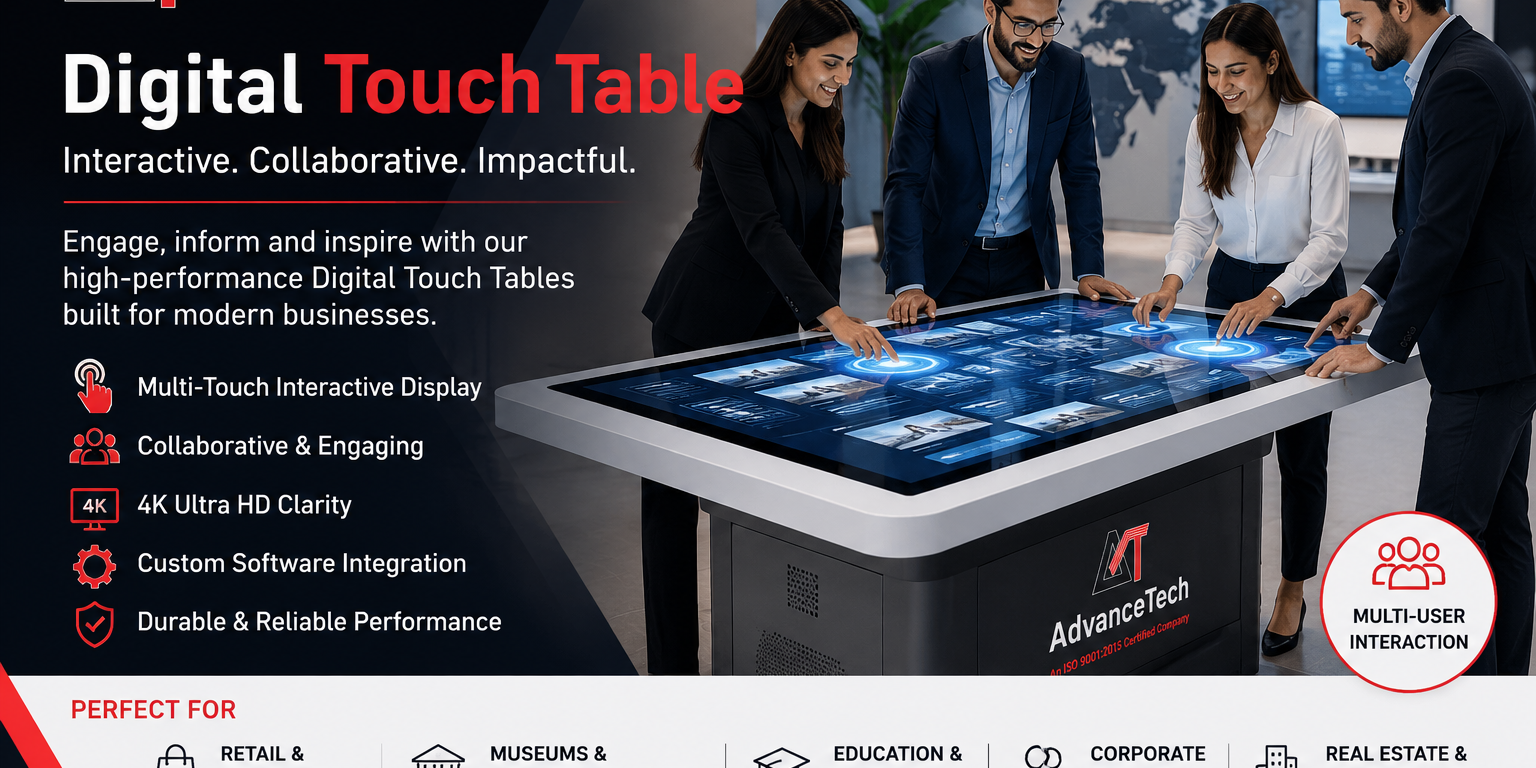
A Digital Touch Table is a horizontal interactive display that allows users to access digital content using touch gestures. Unlike a traditional touchscreen monitor or kiosk, a touch table enables multiple users to interact with the display simultaneously, making it ideal for collaborative environments.
Most commercial digital touch tables include:
- Multi-touch touchscreen technology
- Full HD or 4K display
- Windows or Android operating systems
- Interactive software support
- Durable commercial-grade construction
- Internet and cloud connectivity
These features allow businesses to create engaging digital experiences that are easy to update and manage.
Why Are Digital Touch Tables Becoming Popular?
Businesses today compete not only on products and services but also on customer experience. A digital touch table transforms how information is presented by encouraging users to explore content instead of simply viewing it.
Some of the key reasons organizations invest in digital touch tables include:
- Improved customer engagement
- Interactive product demonstrations
- Enhanced collaboration during meetings
- Better visitor experiences
- Reduced printing costs
- Easy content updates
- Modern brand image
Interactive technology captures attention and encourages longer engagement, which can positively influence purchasing decisions and customer satisfaction.
Which Industries Benefit from Digital Touch Tables?
Retail and Showrooms
Retailers use digital touch tables to display product catalogs, compare features, showcase promotions, and help customers explore products independently.
Instead of flipping through printed brochures, customers can browse information with a simple touch.
Museums and Experience Centres
Museums increasingly rely on digital touch tables for interactive storytelling.
Visitors can:
- Explore historical timelines
- View high-resolution artwork
- Interact with 3D artifacts
- Access multilingual information
- Watch educational videos
This creates a richer and more memorable visitor experience.
Education and Training
Educational institutions use touch tables to make classrooms more collaborative.
Students can:
- Solve problems together
- Interact with digital simulations
- Explore science and engineering models
- Participate in group learning activities
Interactive learning often improves engagement and knowledge retention.
Corporate Offices
Digital touch tables simplify collaboration during meetings by allowing teams to review presentations, annotate documents, brainstorm ideas, and analyze data together.
This creates a more productive meeting environment compared to traditional whiteboards or projectors.
Healthcare
Hospitals and healthcare organizations use interactive touch tables for patient education, medical training, and wayfinding applications.
Visual information often helps patients understand medical procedures more effectively.
What Features Should You Consider Before Buying a Digital Touch Table?
Display Quality
Choose a Full HD or 4K display for crisp images and detailed presentations.
Multi-Touch Support
Commercial-grade touch tables typically support 10, 20, or more simultaneous touch points, enabling multiple users to interact comfortably.
Screen Size
Select the screen size based on your application.
- 43″–55″ for retail
- 55″–65″ for museums
- 65″+ for collaboration and education
Operating System
Windows-based systems offer greater software flexibility, while Android-based solutions are often easier to manage for digital signage applications.
Software Compatibility
Ensure the system supports your preferred content management software, presentations, interactive applications, and third-party integrations.
How Can a Digital Touch Table Improve Customer Engagement?
A digital touch table encourages users to interact rather than passively observe.
Customers spend more time:
- Exploring products
- Watching videos
- Comparing options
- Viewing 3D models
- Accessing technical specifications
Longer engagement often leads to better product understanding and increased customer confidence.
Common Mistakes to Avoid
Many organizations focus only on hardware specifications.
Instead, consider:
Defining Clear Objectives
Identify whether the touch table will be used for sales, education, exhibitions, or collaboration.
Investing in Quality Content
Even the best hardware delivers limited value without engaging digital content.
Ignoring Software Updates
Choose a solution that supports regular software and content updates.
Selecting the Lowest-Cost Option
Commercial environments require reliable hardware designed for continuous operation.
How Do You Maintain a Digital Touch Table?
Regular maintenance helps maximize performance and lifespan.
Recommended practices include:
- Clean the screen using approved microfiber cloths.
- Update software regularly.
- Check touch calibration periodically.
- Protect the display from excessive impact.
- Monitor system performance remotely where possible.
Routine maintenance ensures consistent user experiences and minimizes downtime.
Why Choose AdrTech India for Digital Touch Tables?
AdrTech India provides professionally designed Digital Touch Table solutions tailored for retail, education, museums, corporate offices, healthcare, and experience centres.
Our solutions include:
- Commercial-grade hardware
- Multi-touch technology
- Interactive software integration
- Custom branding options
- PAN India installation and support
- Ongoing technical assistance
Whether you’re planning an interactive showroom or a collaborative meeting space, we can help you deploy a solution that aligns with your business objectives.
Frequently Asked Questions
What is a Digital Touch Table?
A Digital Touch Table is a horizontal interactive touchscreen that enables users to browse, present, and interact with digital content through intuitive touch gestures.
Can multiple people use a Digital Touch Table at the same time?
Yes. Most commercial models support multi-touch technology, allowing multiple users to interact simultaneously.
Which industries use Digital Touch Tables?
Retail, education, museums, healthcare, hospitality, real estate, corporate offices, government organizations, and experience centres commonly use digital touch tables.
Does a Digital Touch Table require internet connectivity?
Basic applications can work offline, while cloud-based content management and remote updates require an internet connection.
Can Digital Touch Tables run custom applications?
Yes. Most enterprise-grade digital touch tables support custom software, interactive presentations, product catalogues, learning modules, and business applications.
What is the difference between a Digital Touch Table and an Interactive Kiosk?
A Digital Touch Table is designed for collaborative, multi-user interaction in a horizontal format, while an Interactive Kiosk is typically a vertical, self-service solution for individual users.
Final Thoughts
A Digital Touch Table is more than an interactive display—it is a powerful communication and collaboration platform. By combining intuitive touch technology with engaging digital content, businesses can create memorable customer experiences, improve team collaboration, and modernize the way information is shared.
As organizations continue to invest in digital transformation, interactive touch tables are becoming a valuable asset for retail, education, museums, healthcare, and corporate environments. Choosing the right solution and implementing meaningful content will help maximize your return on investment while delivering an exceptional user experience.