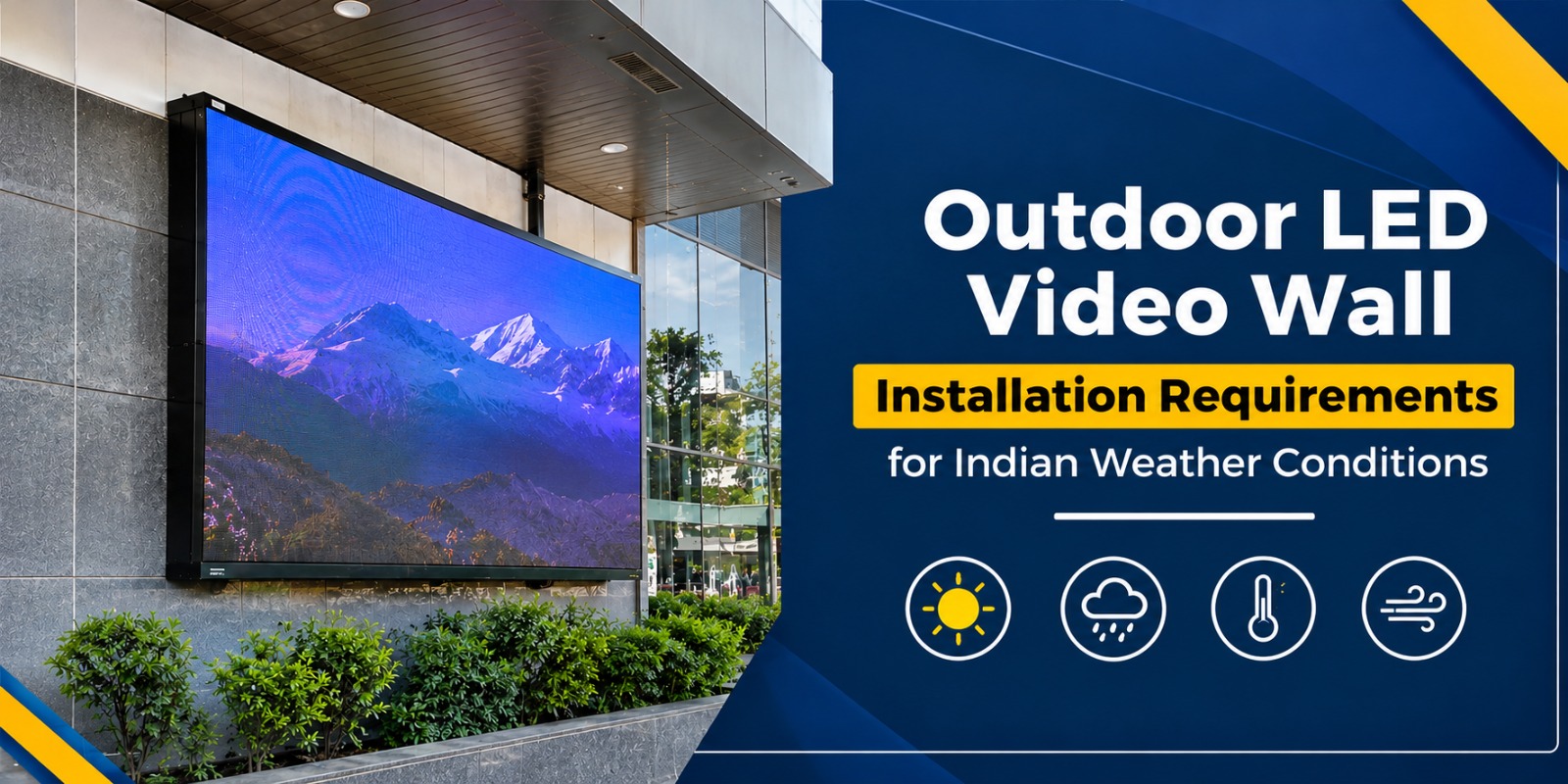
India’s climate can create several challenges for large outdoor digital displays. Extreme summer temperatures, monsoon rainfall, dust, humidity, and strong winds all influence how an LED display should be selected, installed, and maintained. A successful installation requires more than choosing a screen with suitable dimensions. It also involves evaluating the site, planning electrical connections, providing structural support, and selecting appropriate weather protection.
An outdoor LED video wall installation should therefore begin with a detailed assessment of local environmental conditions. The requirements for a display mounted beside a busy highway may differ considerably from those for one installed outside a shopping complex or corporate building.
ADRTech India’s outdoor display product range provides different pixel pitch configurations and mounting possibilities. However, the final configuration should always be selected according to the project’s location, visibility requirements, and operating conditions.
Why Indian Weather Conditions Matter for Outdoor Display Installation
Outdoor displays remain exposed to environmental conditions throughout their operating life. In India, these conditions can change significantly between seasons and geographical regions.
Some important factors include:
-
Summer heat: High ambient temperatures can increase the thermal load on electronic components.
-
Monsoon rainfall: Water entering through poorly protected joints or cable connections can cause electrical and operational problems.
-
Dust and pollution: Dust accumulation can affect ventilation and increase cleaning requirements.
-
Humidity: Prolonged moisture exposure can cause corrosion and deterioration in unprotected components.
-
Strong winds: Large display structures must withstand wind pressure without compromising mounting stability.
These factors should be considered before finalising the display model, enclosure, mounting arrangement, and installation location.
Outdoor LED Video Wall Installation Requirements for Indian Weather Conditions
A reliable installation depends on several interconnected elements. Plan weather protection, heat management, structural engineering, and electrical safety together rather than as separate tasks.
1. Weather Protection and Suitable IP Rating
The enclosure must provide protection appropriate to the environmental exposure at the installation site. An IP rating indicates the level of protection an enclosure offers against the entry of solid particles and water under specified testing conditions.
For an outdoor installation, consider:
-
Protection against dust and airborne particles.
-
Resistance to rainwater exposure.
-
Proper sealing around cabinet joints.
-
Protected cable entry points.
-
Suitable connectors and electrical enclosures.
Do not select an IP rating simply because it is commonly advertised for outdoor displays. Check the manufacturer’s documented specifications and confirm that the protection applies to the complete assembled installation.
2. Heat Management and Proper Ventilation
Indian summers can expose outdoor display equipment to high ambient temperatures, particularly when screens are installed in direct sunlight. Electronic components also generate heat during operation, making thermal management an important part of installation planning.
Consider the following measures:
-
Provide adequate airflow around the display structure.
-
Avoid arrangements that trap hot air behind the cabinet.
-
Follow the manufacturer’s ventilation requirements.
-
Use suitable cooling arrangements where specified.
-
Keep ventilation openings free from dust and obstructions.
The product catalogue lists an operating temperature range of -20°C to 50°C for its specified configurations. Actual suitability should be confirmed against the selected model and the expected conditions at the site.
Advance Tech India
3. Structural Support and Wind Load Assessment
An outdoor display can have a considerable surface area, which makes structural planning essential, especially in open and exposed locations.
Common mounting arrangements include:
-
Wall-mounted structures.
-
Pole-mounted installations.
-
Custom supporting frames.
-
Movable stands, where appropriate.
Before installation, qualified structural professionals should evaluate the supporting surface, frame strength, fixing points and expected wind loads. The assessment should consider the display dimensions, mounting height, surrounding buildings and local exposure conditions.
A mounting structure designed for a sheltered location may not be suitable for an open roadside installation. Structural calculations and appropriate anchoring are therefore essential.
4. Electrical Safety and Power Protection
Electrical planning is particularly important during the Indian monsoon season, when rain and moisture can affect exposed connections.
The installation should include:
-
A properly assessed electrical supply.
-
Suitable earthing and grounding.
-
Appropriate circuit breakers and protection devices.
-
Surge protection based on the electrical design.
-
Weather-protected power connections.
-
Secure routing of power and data cables.
Electrical connections should be installed and inspected by qualified professionals. Avoid exposed joints, temporary wiring arrangements and connections that allow water to collect around electrical components.
5. Drainage, Sealing and Moisture Prevention
Water management should be considered during the design of the supporting structure. Even when a display cabinet has suitable weather protection, poor installation practices can create additional points of water entry.
Ensure that:
-
Cable entry points are properly sealed.
-
The mounting structure does not trap rainwater.
-
Water can drain away from vulnerable areas.
-
Seals are compatible with the manufacturer’s installation instructions.
-
Electrical enclosures are positioned appropriately.
Before the monsoon begins, inspect accessible seals, cable routes and drainage arrangements. Any damaged or deteriorated sealing should be addressed promptly.
6. Sunlight Visibility and Display Positioning
A screen that looks clear in an indoor showroom may perform differently under direct sunlight. Outdoor installations need suitable brightness, positioning and viewing-distance planning.
During the site survey, evaluate:
-
The direction and intensity of sunlight.
-
Screen orientation.
-
Expected viewing distance.
-
Display height and viewing angle.
-
Nearby buildings and potential obstructions.
-
Possible reflections or glare.
Brightness should be selected according to the location and intended application. Increasing brightness without considering viewing conditions, power requirements and heat management is not a complete solution.
Choosing the Right Display Specifications for Indian Locations
Technical specifications should match the intended viewing environment. Pixel pitch, screen size, brightness and resolution all influence the final result.
Pixel pitch refers to the distance between the centres of neighboring pixels. A smaller pixel pitch generally supports a sharper image at shorter viewing distances, while larger pitches may be suitable for displays viewed from farther away.
The referenced product catalogue lists P3, P4, P6, P8 and P10 configurations. It also provides different brightness specifications across these models. Buyers should compare the actual model specifications rather than assume all configurations have identical performance.
Advance Tech India
Other considerations include
-
Screen dimensions: Select dimensions according to the available installation space.
-
Brightness: Match the brightness specification to ambient lighting.
-
Cabinet construction: Review the enclosure and protection details.
-
Resolution: Consider the content and expected viewing distance.
-
Mounting arrangement: Choose a structure suitable for the building or installation site.
Custom dimensions may also require additional structural and electrical planning.
Installation Planning for Different Indian Environments
Installation requirements can vary depending on the region and its environmental conditions.
| Environment | Important installation considerations |
|---|---|
| Hot and dry regions | Heat management, ventilation and dust protection |
| Coastal regions | Humidity exposure, corrosion protection and sealing |
| High-rainfall regions | Water drainage, cabinet protection and cable sealing |
| Polluted urban areas | Dust accumulation, cleaning and ventilation |
| Open highways | Wind load, mounting stability and viewing distance |
For example, a display installed in a coastal area may need greater attention to moisture and corrosion protection. In a dusty industrial location, cleaning access and ventilation maintenance may become more important.
A location-specific survey helps identify these requirements before equipment and mounting arrangements are finalised.
Smart Content Management and Remote Display Operations
Installation planning should also consider how the display will receive and present content after commissioning.
Depending on the selected configuration, content management options may include GSM, LAN or USB connectivity. These options can support different content transfer and operational requirements. Buyers should confirm the available method for their chosen model.
Businesses can use digital displays to present promotional videos, product information, announcements, and public messages. Content scheduling can also help organise campaigns for different times or occasions.
Separately implemented artificial intelligence solutions may support advanced monitoring or content analytics in suitable systems. However, these capabilities should not be assumed to be included in every display. Their availability depends on the connected software, hardware and integration requirements.
Maintenance Checklist for Long-Term Outdoor Performance
Regular maintenance helps identify developing problems before they interrupt normal operation.
Use this practical checklist:
-
Inspect cabinet condition: Look for visible damage, loose panels and deteriorated seals.
-
Clean the display: Remove dust using manufacturer-approved cleaning methods.
-
Check electrical connections: Inspect accessible power and data connections.
-
Review mounting structures: Check accessible fasteners and supporting components.
-
Maintain ventilation: Ensure airflow paths remain clear.
-
Check display output: Look for changes in brightness, colour or image quality.
-
Arrange professional inspections: Schedule additional checks after severe weather events.
Maintenance frequency should depend on the installation environment, operating schedule and manufacturer recommendations. Avoid opening electrical compartments or carrying out repairs without appropriate technical expertise.
Common Installation Mistakes to Avoid
Some installation problems arise because important requirements are considered too late in the project.
Common mistakes include:
-
Selecting equipment without conducting a site survey.
-
Ignoring wind exposure and structural calculations.
-
Choosing pixel pitch without considering viewing distance.
-
Leaving cable entries inadequately sealed.
-
Providing insufficient ventilation.
-
Overlooking electrical protection.
-
Failing to plan future inspection and maintenance access.
An Outdoor Video Wall should be treated as a complete installation project rather than simply a screen mounted on a wall or frame. Coordinating the display, structure, electrical system and environmental protection helps reduce avoidable installation issues.
Conclusion
Successful outdoor display installation in India depends on understanding the local environment and planning every major component accordingly. Heat management, weather protection, structural stability, electrical safety, drainage and regular maintenance all contribute to a well-planned project.
Before selecting a configuration, assess the installation location, viewing distance, expected weather exposure and operational requirements. Review the manufacturer’s specifications and seek professional guidance for structural and electrical work.
ADRTech India offers outdoor LED display configurations for different project requirements. Explore the Outdoor Video Wall product range to review available options and discuss the specifications suitable for your installation.
Frequently Asked Questions
1. What weather protection is required for an outdoor LED display in India?
An outdoor display requires suitable protection against dust and water based on its installation environment. Check the documented IP rating, cabinet sealing, cable protection and manufacturer’s specifications before selecting equipment for a particular location.
2. How can an outdoor LED display handle extreme Indian summer temperatures?
An outdoor display can manage high temperatures through appropriate ventilation, thermal planning and manufacturer-approved cooling arrangements. Positioning, airflow and operating conditions should be assessed before installation, particularly in locations exposed to direct sunlight.
3. Why is wind load assessment important before installing an outdoor LED display?
Wind load assessment helps determine whether the mounting structure can safely support the display under expected wind conditions. Qualified structural professionals should evaluate the frame, fixing points, installation height and local exposure before commissioning.
4. How can rainwater damage an outdoor LED display?
Rainwater can cause problems when it enters through damaged seals, exposed cable connections or inadequately protected enclosures. Proper drainage, suitable weather protection and regular inspection help reduce moisture-related installation risks.
5. Which pixel pitch is suitable for an outdoor LED display in India?
The suitable pixel pitch depends on viewing distance, screen dimensions, resolution requirements and application. Smaller pitches generally support closer viewing, while larger pitches may work for distant audiences. Compare available models before selecting one.
6. What maintenance is required after installing an outdoor LED display?
Regular maintenance includes cleaning dust, checking weather seals, inspecting electrical connections, reviewing structural fixings and monitoring image quality. Follow manufacturer instructions and arrange professional inspections, particularly after heavy rainfall or severe weather.