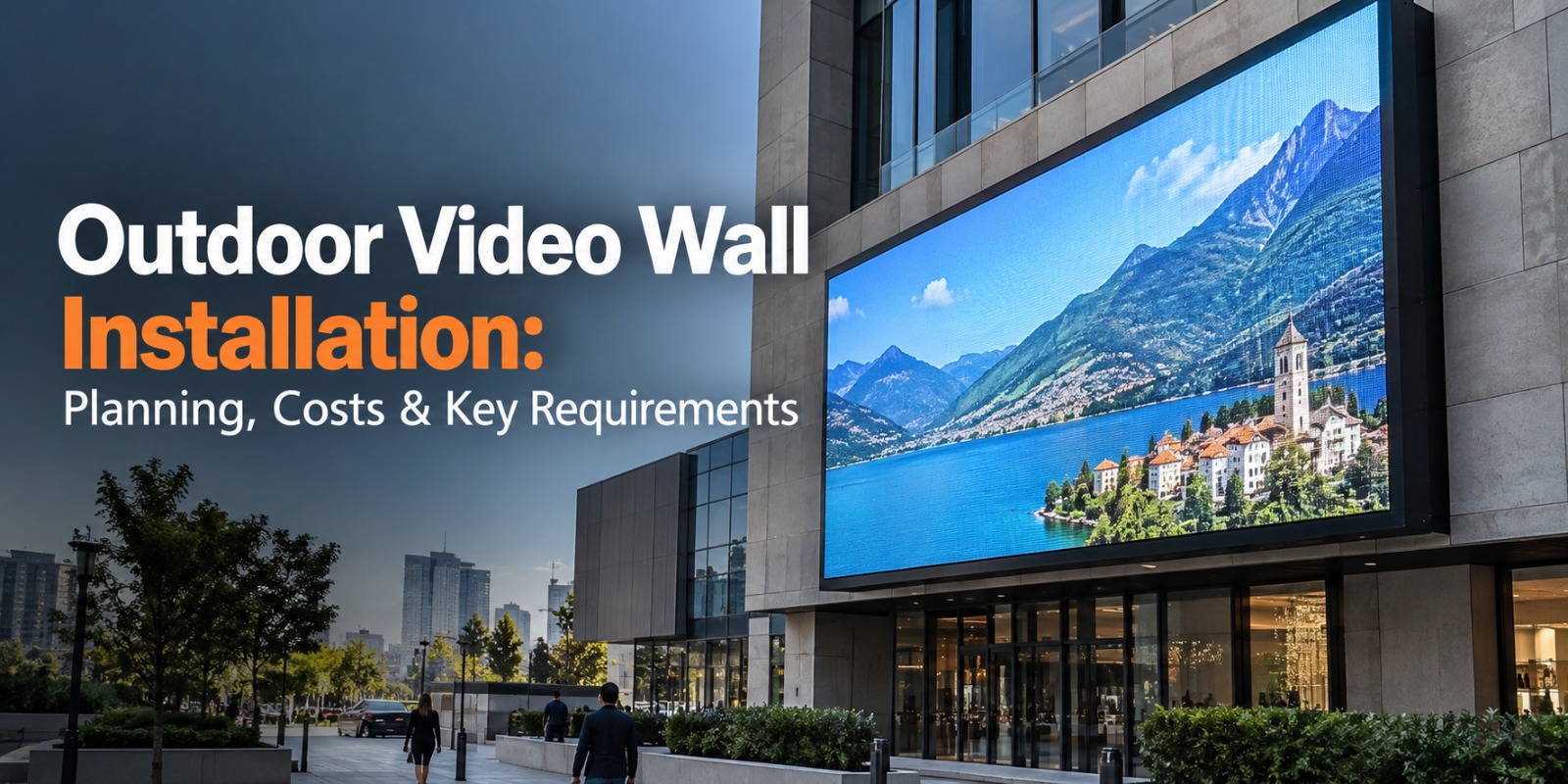
Installing an outdoor LED display is a significant investment, especially for businesses, event venues, shopping centers, stadiums, and advertising locations. The right display needs to remain visible in changing weather and lighting conditions while delivering reliable performance over time.
A successful outdoor video wall project starts long before installation. Site conditions, viewing distance, brightness, pixel pitch, structural support, electrical requirements, and maintenance all need to be considered together. Planning these factors properly can help avoid costly modifications later.
Outdoor Video Wall Installation: What Should You Plan First?
Before selecting a display, define where and how it will be used. A screen installed outside a shopping mall may have very different requirements from one placed beside a highway, at a stadium, or at an event venue.
Start by identifying:
- The installation location
- Expected viewing distance
- Screen dimensions
- Type of content
- Daily operating hours
- Indoor-facing or fully outdoor exposure
- Available power supply
- Mounting or structural requirements
- Maintenance access
The surrounding environment is equally important. Direct sunlight, dust, heat, rain, and humidity can affect the display and its supporting components. In India, seasonal changes make environmental planning particularly important.
Site Assessment and Viewing Distance
A professional site assessment helps determine whether the proposed location can safely and effectively support the display.
One of the first questions buyers should ask is, “How far away will viewers normally be from the screen?”
Viewing distance influences the appropriate pixel pitch and screen size. A display intended for close viewing generally needs different specifications from one positioned several metres away in a large public space.
The assessment should also consider:
- Available wall or ground space
- Viewing angles
- Nearby buildings and structures
- Sunlight direction
- Wind exposure
- Accessibility for installation
- Maintenance access
- Electrical connection points
A detailed assessment helps ensure the final configuration is based on the actual site rather than a standard specification.
Choosing the Right Display Specifications
An outdoor LED video wall needs to be selected according to both its visual purpose and operating environment.
Pixel Pitch
Pixel pitch refers to the distance between individual LED pixels. It affects image detail and viewing quality. The ideal selection depends on viewing distance, screen size and the type of content being displayed.
Brightness
Outdoor screens need sufficient brightness to remain readable during daylight. However, simply choosing the highest brightness is not necessarily the right approach. The display should provide appropriate visibility while supporting comfortable viewing in different lighting conditions.
Weather Protection
Rain, dust, and humidity require suitable protection. Buyers should check the manufacturer’s stated IP rating and understand what level of environmental protection it provides.
For Indian installations, the design should also account for high summer temperatures, dust exposure, and monsoon rainfall.
What Affects Outdoor Video Wall Installation Costs?
There is no single price that applies to every project because installation costs depend on the complete system and site requirements.
Major cost factors can include:
- Display size
- Pixel pitch
- LED technology and cabinet specification
- Required brightness
- Mounting structure
- Electrical work
- Control system
- Installation complexity
- Site accessibility
- Weather protection
- Cabling and supporting equipment
- Maintenance arrangements
For example, a large display requiring a custom steel structure and additional electrical work will naturally have different project requirements from a smaller installation on an existing suitable structure.
Buyers should therefore compare complete project proposals rather than comparing only the quoted screen price.
Power, Mounting Structure, and Control Systems
An Outdoor Led Video Wall requires a suitable electrical and structural setup.
The mounting structure must be designed according to the screen dimensions, weight, location, and environmental conditions. Outdoor installations may also experience wind loads, making structural planning an important safety consideration.
Power requirements should be assessed before installation. Proper electrical distribution, cabling, protection, and earthing should be planned according to the project requirements and applicable standards.
The control system is another important part of the installation. Depending on the application, users may need to manage advertisements, videos, announcements, branding content, or live information. The selected system should be convenient for operators and compatible with the intended content workflow.
Common Installation Mistakes to Avoid
Many problems can be prevented by addressing the right questions before installation.
Choosing specifications based only on price: A lower initial quotation may not include all structural, electrical, or support requirements.
Ignoring viewing distance: Screen specifications should match the actual audience position.
Underestimating weather conditions: Outdoor equipment needs suitable environmental protection.
Forgetting maintenance access: Technicians need practical access to modules, cabinets, and supporting equipment.
Not planning future content: A screen may eventually be used for more than its original purpose. Planning for future requirements can improve long-term value.
Maintenance and Long-Term Requirements
An Outdoor Video Wall should be treated as an ongoing technology investment rather than a one-time installation.
Regular inspection can help identify issues with LED modules, power components, connections, ventilation, and control equipment. Outdoor screens may also require cleaning because dust and environmental exposure can affect appearance and performance.
Before purchasing, ask the supplier about:
- Warranty coverage
- Spare parts availability
- Technical support
- Module replacement
- Preventive maintenance
- Software or control-system support
- Service accessibility
ADRTech India can help buyers assess display requirements according to the intended application, installation environment, and operational needs.
Frequently Asked Questions
What is the first thing to check before installing an outdoor LED display?
Start with the site. Evaluate viewing distance, available space, sunlight, weather exposure, structural requirements, power availability, and maintenance access.
How does viewing distance affect display selection?
Viewing distance helps determine the suitable pixel pitch and screen size. A display for close viewing generally requires different specifications from one designed for a large outdoor audience.
Does an outdoor display need weather protection?
Yes. Outdoor installations should have appropriate protection against environmental conditions such as rain and dust. Buyers should verify the manufacturer’s stated IP rating.
Why is brightness important?
Outdoor displays must remain visible under daylight conditions. The required brightness depends on the installation environment, sunlight exposure and viewing requirements.
What determines installation cost?
Display size, pixel pitch, brightness, mounting structure, electrical work, control equipment, site accessibility, and installation complexity can all influence the overall project cost.
How often should an outdoor LED display be maintained?
Maintenance frequency depends on the display, operating environment, and usage. Regular inspections and timely servicing can help identify potential problems before they become major issues.
Conclusion
Planning an outdoor display installation involves much more than selecting a screen. Viewing distance, pixel pitch, brightness, weather protection, structure, electrical requirements, control systems, and maintenance should all be considered as part of one complete solution.
For Indian buyers, environmental conditions such as strong sunlight, heat, dust, and monsoon weather make proper site assessment especially valuable. A well-planned installation can provide better visibility, operational reliability, and easier maintenance over its working life.
ADRTech India provides LED display solutions for different commercial, institutional, advertising, and event applications, helping buyers evaluate their requirements before selecting a suitable configuration.