Choosing the right LED digital scoreboard is an important decision for schools, colleges, sports academies, stadiums, cricket grounds, and multi-sport venues. A scoreboard is not only about displaying numbers; it should provide clear visibility, reliable operation, and convenient control throughout a match or event.
Before making a purchase, buyers should look beyond screen size and price. Factors such as viewing distance, brightness, weather protection, display content, control systems, and long-term maintenance can directly affect the performance and usability of the display.
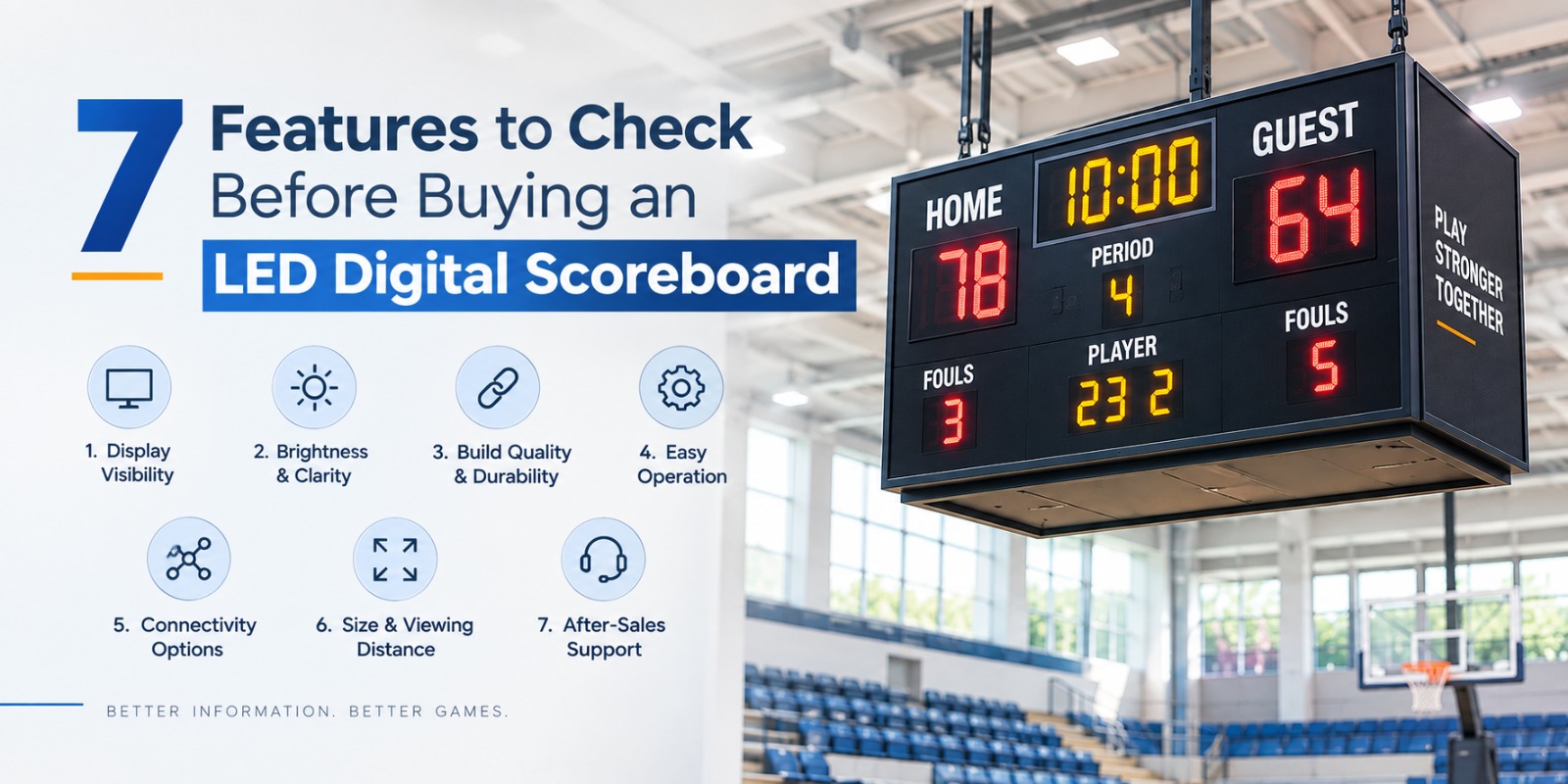
Check Before Buying an LED Digital Scoreboard
1. Pixel Pitch and Viewing Distance
Pixel pitch determines how closely the individual LED pixels are positioned on the display. It directly affects image clarity, especially when viewers stand relatively close to the screen.
For a large cricket ground or stadium, viewers may be several meters away, while an indoor basketball court can have spectators sitting much closer to the display. Therefore, select pixel pitch based on the actual viewing distance rather than choosing the smallest available pixel pitch.
A professional assessment of the venue can help determine the appropriate display specification.
2. Brightness and Visibility
Visibility is one of the most important considerations for a digital sports scoreboard. An outdoor display may need to remain clearly visible under strong daylight, while an indoor installation generally operates under controlled lighting conditions.
Buyers should consider:
- Daytime viewing requirements
- Direct sunlight exposure
- Night-time visibility
- Automatic brightness adjustment
- Viewing angles
- Indoor or outdoor installation
The objective is balanced visibility rather than simply selecting the highest brightness available.
3. Weather Protection and Build Quality
Outdoor sports venues expose electronic displays to changing environmental conditions. Rain, dust, heat, and humidity can affect equipment if the display is not designed for the intended environment.
When purchasing an LED sports scoreboard, check the manufacturer’s stated protection rating, cabinet construction, ventilation, and heat-management arrangements.
For outdoor installations, buyers should also ask about:
- Weather-resistant cabinets
- Dust and moisture protection
- Thermal management
- Mounting structure
- Protection of electronic components
- Service accessibility
These details can influence reliability over the long term.
4. Display Size and Viewing Area
The correct screen size depends on the venue layout, viewing distance, and amount of information that needs to be displayed.
A scoreboard for a school sports ground may have different requirements from one installed in a professional stadium. Similarly, an indoor court may need a compact display because spectators are positioned closer to the playing area.
Before choosing the size, consider where the display will be installed and identify the farthest viewing position. The information should remain readable without requiring spectators to move closer to the screen.
5. Control System and Real-Time Scoring
A scoreboard is only useful when information can be updated quickly and accurately. The control system should therefore be considered alongside the display itself.
An electronic scoreboard may use dedicated software, computers, remote controls, or integration with scoring and timing equipment, depending on the application.
Ask the supplier:
- How are scores updated?
- Can match information be changed quickly?
- Is the system easy for operators to use?
- Can it integrate with existing scoring equipment?
- What happens if the primary control device has an issue?
- Is technical support available?
A straightforward control workflow can make a significant difference during live sporting events.
6. Content Flexibility and Multi-Sport Support
Modern sports displays can potentially show much more than a basic score. Depending on the system, venues may want to display team names, match time, innings, quarters, player information, statistics, announcements, sponsor messages, or promotional graphics.
A sports scoreboard display designed for multiple sports can be useful for venues hosting different events throughout the year.
Before buying, identify the sports and information formats you expect to support. A cricket venue, for example, may have different display requirements from a basketball or football facility.
Planning for future requirements can also help avoid replacing the complete system when the venue expands its use.
7. Maintenance, Warranty, and After-Sales Support
The initial purchase price is only one part of the overall investment. Maintenance and technical support can influence the long-term cost and usability of a scoreboard.
Ask about:
- Warranty coverage
- Availability of replacement LED modules
- Spare parts
- Technical support
- Installation assistance
- Software support
- Routine maintenance
- Service response
For large sports venues, convenient access to serviceable components can also help reduce downtime.
When comparing suppliers, consider the complete ownership experience rather than focusing exclusively on the lowest quotation.
What to Check Before Choosing a Sports Scoreboard Display
Before placing an order, prepare a simple requirement list:
- Indoor or outdoor installation
- Minimum and maximum viewing distance
- Required display dimensions
- Sports to be supported
- Required scoring information
- Brightness requirements
- Weather protection
- Control and software requirements
- Existing scoring-system integration
- Maintenance and service expectations
Sharing these details with the supplier allows the proposed solution to be matched more closely with the venue.
ADRTech India can help businesses and institutions evaluate LED display requirements based on the application, venue conditions, and intended usage.
Common Buying Mistakes to Avoid
One common mistake is selecting a display based only on its price. A cheaper system may not provide the specifications, durability, or support required for a particular venue.
Another mistake is ignoring viewing distance. A display that looks excellent from close range may not provide the same readability from the opposite side of a large ground.
Buyers should also avoid overlooking outdoor conditions, control-system compatibility, and future content requirements. Asking these questions before installation can prevent unnecessary changes later.
Frequently Asked Questions
What should I consider first when buying a scoreboard?
Start with the venue, viewing distance, indoor or outdoor environment, sports requirements, and information that needs to be displayed.
Is a larger scoreboard always better?
Not necessarily. Screen size should correspond to the venue, viewing distance, and amount of information required.
Can one scoreboard support multiple sports?
Yes, depending on its control software and configuration. Buyers should confirm which sports and scoring formats the system supports.
Why does brightness matter for outdoor sports?
Outdoor displays may need to remain readable in changing daylight conditions. The required brightness depends on the installation environment and viewing conditions.
What should I ask about maintenance?
Ask about warranty, spare parts, replacement modules, technical support, software assistance, and service arrangements.
Can a scoreboard display advertisements?
Depending on its configuration, a modern scoreboard can support additional content such as sponsor messages, graphics, and promotional material. Confirm the required content capabilities before purchase.
Conclusion
The right LED digital scoreboard should be selected according to the venue’s actual requirements rather than screen size or price alone. Pixel pitch, viewing distance, brightness, weather protection, control systems, content flexibility, and after-sales support all deserve attention.
For schools, colleges, sports academies, stadiums, and professional venues, understanding these factors before purchase can make the selection process clearer and help create a dependable spectator experience.
ADRTech India offers LED display solutions for different commercial, institutional, and sports applications, helping buyers evaluate display requirements according to their intended use.